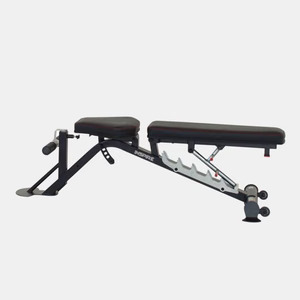
A workout bench can look like a simple piece of equipment, but the right design can change how much you can do in a home gym.
With an adjustable bench, you can change the backrest angle to support different pressing exercises, seated movements, and dumbbell workouts. Instead of dedicating space to several exercise-specific benches, one adjustable model can support a broader range of training.
For home gym owners in Dubai, Abu Dhabi, Sharjah, Ajman, Ras Al Khaimah, Fujairah, and across the UAE, the challenge is choosing a bench that offers useful adjustment options without becoming difficult to store or move.
Before buying, consider how you train, which exercises you perform most often, and how the bench will fit into your existing equipment setup.
Why the Backrest Angle Changes Your Workout
A flat bench provides a stable surface for exercises such as dumbbell presses, supported rows, and certain core movements. An adjustable bench adds different backrest positions, allowing you to change your body angle during selected exercises.
Depending on the model, you may be able to use it for:
- Flat dumbbell presses
- Incline dumbbell presses
- Seated shoulder presses
- Supported dumbbell rows
- Dumbbell fly variations
- Seated curls
- Certain core exercises
The exact exercise selection depends on the bench’s adjustment range, seat design, stability, and your technique.
The benefit is flexibility. You can change your workout without needing a separate bench for every movement.
Flat, Incline, and Decline Positions
Not every adjustable bench offers the same range of movement.
Flat Position
A flat position provides a horizontal surface for exercises such as dumbbell bench presses and supported movements.
It is often one of the most frequently used settings in a home gym.
Incline Position
An incline setting raises the backrest to an angle above horizontal.
This can support incline dumbbell presses and seated upper-body exercises. Different angles change your body position and how an exercise feels.
Decline Position
Some benches offer a decline configuration, in which the body is positioned with the upper body lower than the hips for certain exercises.
This feature is not available on every model. Check the manufacturer’s specifications before assuming a bench supports decline training.
If you mainly perform flat and incline exercises, a model with those positions may be sufficient.
Choose an Adjustment Mechanism You Can Use Easily
An adjustable bench is only convenient if changing its position is straightforward.
Common mechanisms include ladder-style adjustments, locking pins, and other supported systems.
When comparing designs, check how easily you can:
- Raise the backrest
- Lower it into the flat position
- Adjust the seat
- Lock the chosen position securely
- Confirm that the mechanism is engaged
Frequent adjustments should not turn a simple workout into a lengthy setup process.
Follow the manufacturer’s instructions and never use a bench if its adjustment mechanism is damaged or fails to lock securely.
Backrest and Seat Adjustment Are Different
Some benches allow you to change only the backrest, while others also offer adjustable seat positions.
A movable seat can help you find a more comfortable position for certain incline exercises and seated movements.
However, additional adjustment points do not automatically make a bench better.
Think about the exercises you intend to perform and whether the seat positions genuinely improve your setup.
For example, a bench used mainly for flat presses may not require as many adjustment options as one used for presses at several angles.
Stability Matters More Than Appearance
A bench needs to feel secure while you lift weights.
A model can have an attractive finish and several adjustment positions but still be unsuitable if its base, frame, or locking system does not provide the stability you need.
Check the following specifications:
- Frame construction
- Base width and design
- Leg placement
- Locking mechanisms
- Bench weight
- Manufacturer’s load rating
- Assembly requirements
If possible, test the bench on a level surface before training.
Pay attention to movement at the joints and feet. Stop using the equipment if you notice unusual instability, loose components, or a damaged frame.
Understand the Weight Capacity
The stated capacity is an important specification, but it needs to be interpreted correctly.
A bench’s load rating may refer to the total supported load, including the user and the weights, or it may be described using a different manufacturer-specific definition.
Read the product documentation carefully rather than assuming every brand measures capacity in the same way.
Consider the loads you expect to use and leave an appropriate margin within the manufacturer’s stated limits.
Never exceed the rated capacity or assume that a high rating makes an unstable setup safe.
Match the Bench to Your Dumbbells
An adjustable bench becomes more versatile when it works well with your other equipment.
If you already own dumbbells, check that the bench provides sufficient room to position yourself, lift the weights into place, and complete each movement comfortably.
Consider:
- Bench width
- Backrest length
- Seat dimensions
- Clearance around the frame
- Stability during pressing
- Space for setting down the dumbbells
A bench that is too wide or poorly suited to your body proportions may feel restrictive during some exercises.
If you plan to use heavier dumbbells, pay particular attention to stability and the manufacturer’s capacity information.
Build More Exercise Variety Into a Small Room
Home gym equipment needs to earn its space.
An adjustable bench can support several types of exercise while remaining relatively compact compared with many large strength machines.
You could combine it with:
- Dumbbells
- Resistance bands
- A squat rack
- A cable machine
- Kettlebells
You do not need to buy all these items at once.
Start with the movements you want to perform most often, then add equipment that expands your training options.
In smaller UAE apartments, consider whether the bench can be moved away from the main workout area after use. Some models include transport wheels, although these do not eliminate the need to lift and move the bench carefully.
Measure Your Workout Area Before Ordering
The bench’s listed dimensions are only part of the space calculation.
You also need room to move around it, position dumbbells, and complete exercises without hitting nearby furniture or equipment.
Measure:
- Bench length
- Bench width
- Height in different positions
- Clearance around the bench
- Storage area
- Doorway access
If the bench will be used alongside a rack, check that the two pieces of equipment work together without obstructing the barbell or safety components.
For apartment gyms, also consider the delivery route. A bench may need to pass through narrow corridors, doorways, or lifts before reaching the workout room.
Foldable Benches: Useful or Unnecessary?
Some adjustable benches can be folded or configured for more compact storage.
This can be useful when a workout area also serves as a living room, study, or spare bedroom.
Before choosing a foldable design, check:
- How it folds
- Whether tools are required
- How stable it is when assembled
- Its stored dimensions
- How easily it can be moved
- Whether folding affects the adjustment options
A folding bench can save space, but convenience should not come at the expense of stability or suitable construction.
If you have a dedicated gym room, a non-folding model may be perfectly practical.
Upholstery and Everyday Comfort
The padding influences how comfortable the bench feels during longer workouts.
Look for a surface that provides suitable support without feeling excessively soft or slippery.
Check the backrest and seat for:
- Padding thickness
- Surface texture
- Overall dimensions
- Stitching quality
- Ease of cleaning
A bench should support your body without making it difficult to maintain a stable position during an exercise.
For a shared home gym, choose a finish that is practical to clean after repeated use.
A Sample Adjustable-Bench Workout
An adjustable bench can support a simple dumbbell session covering several movement patterns.
For example:
- Flat dumbbell press
- Incline dumbbell press
- Chest-supported row, where the bench angle and setup allow it
- Seated dumbbell shoulder press
- Seated curls
Select appropriate weights and use controlled repetitions. Adjust the bench only when the weights are safely set down and the equipment is not under load.
This example is not a complete programme for everyone. Choose exercises and resistance that match your experience and physical capabilities.
Maintenance in the UAE
Dust, repeated use, and environmental conditions can affect gym equipment over time.
To keep an adjustable bench in suitable condition:
- Wipe down the upholstery regularly.
- Inspect bolts and frame connections.
- Check adjustment pins and locking parts.
- Look for tears in the padding.
- Confirm that the feet remain stable.
- Follow the manufacturer’s maintenance instructions.
If the bench is stored in a garage or a space exposed to high temperatures or humidity, inspect it regularly and protect it from unnecessary moisture and direct sunlight.
Common Buying Mistakes
Choosing Only by the Number of Positions
More positions can be useful, but they matter only if they support your intended exercises.
Ignoring the Seat
A fixed or poorly positioned seat may affect comfort during incline movements.
Forgetting the Load Rating
Understand what the manufacturer’s capacity figure actually represents.
Measuring Only the Bench
Allow space for dumbbells, movement, and safe access.
Buying Without Checking Storage
A large bench may become inconvenient in a multipurpose room.
Overlooking Assembly
Check whether tools, instructions, or additional assistance are required.
What to Check Before Buying Online in the UAE
When comparing adjustable benches, review the complete specifications.
Look at:
- Adjustment positions
- Backrest and seat dimensions
- Frame construction
- Weight capacity
- Locking mechanism
- Upholstery
- Foldable design, if applicable
- Transport wheels
- Product weight
- Assembly requirements
- Warranty and delivery details
Also consider how the bench will work with the equipment you already own. A suitable bench should improve your existing setup rather than create a new space or compatibility problem.
Frequently Asked Questions
Is an adjustable bench worth buying for a home gym?
It can be useful if you perform exercises that benefit from different backrest angles. It is less essential if your routine mainly uses a flat surface.
Can I use an adjustable bench with dumbbells?
Yes, provided the bench is suitable for the intended exercises, its capacity is respected, and the surrounding area offers enough clearance.
Is a foldable adjustable bench better?
Not automatically. Foldable models can be useful where storage space is limited, while a fixed design may suit a dedicated workout room.
How do I know whether a bench is stable?
Check its frame, base, locking mechanisms, assembly, and manufacturer specifications. If possible, inspect it on a level surface before using it with weights.
Can an adjustable bench replace every gym bench?
No. It can support a broad range of movements, but specialised equipment may still be useful for particular exercises or training environments.
Final Thoughts
An adjustable bench can make a home gym more versatile without requiring several separate benches.
Focus on the positions you will actually use, the stability of the frame, the comfort of the padding, and the way the bench fits your dumbbells and available space.
For UAE homes, also consider delivery access, storage, and the environment where the equipment will be kept.
Choose a bench that supports your regular training and allows you to move comfortably between exercises. For more home fitness and strength-training equipment, explore Athletix.
No responses yet